
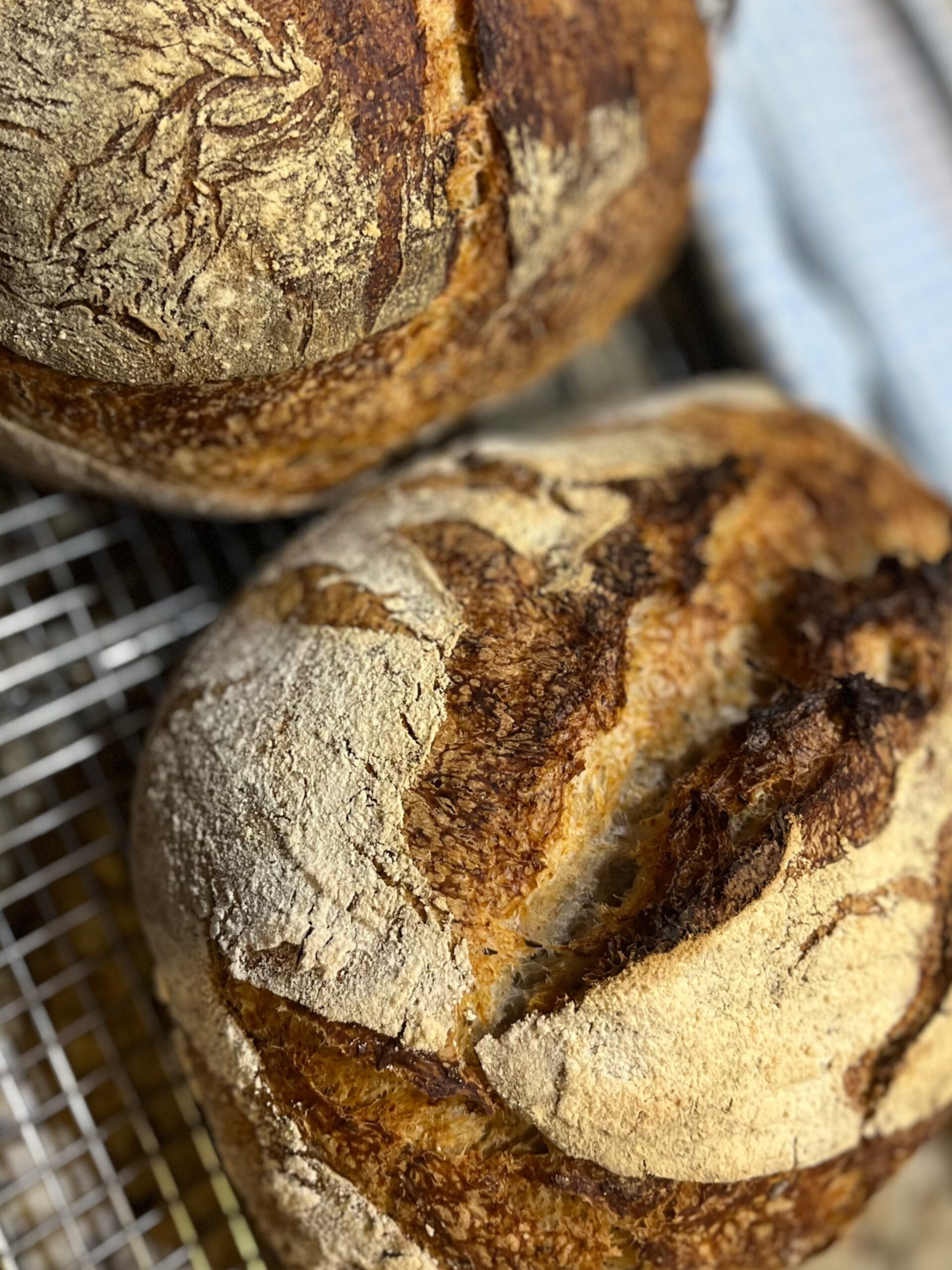
This European sourdough rye bread recipe creates a rustic artisan loaf with deep flavor, hearty texture, and traditional baking character. Rye flour and natural fermentation give this bread its distinctive taste and structure.
This European sourdough rye bread recipe is ideal for bakers looking to create authentic homemade bread with classic European influence.
How to Make European Sourdough Rye Bread
To make European sourdough rye bread, begin by preparing an active sourdough starter and combining it with rye flour, water, and salt. The dough develops slowly, allowing flavor and texture to deepen naturally.
Working with Rye Flour and Fermentation
Rye flour behaves differently than wheat flour, requiring careful hydration and fermentation management. As a result, patience becomes essential when developing proper crumb structure and balanced acidity.
Baking and Serving the Bread
Bake the loaf until the crust becomes dark and firm while the interior remains moist and hearty. This contrast creates the classic texture associated with traditional European rye bread.
This sourdough rye bread recipe rewards patience with complex flavor and satisfying texture. Whether served fresh, toasted, or paired with savory toppings, it remains a timeless staple for traditional home baking.
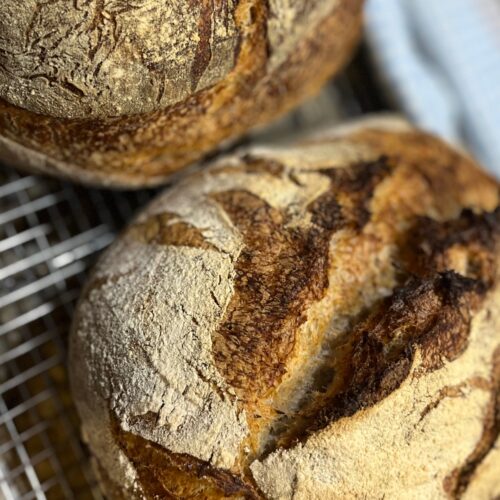
European Sourdough Rye
Ingredients
- 800 grams Italian 00 Bread Flour I buy Polselli Link – https://amzn.to/49tKDtc
- 200 grams Rye Flour I use Bob’s Red Mill Link – https://amzn.to/4wqMxVl
- 830 grams Water roughly compensating for water in Starter – looking for 83% moisture.
- 25 grams Salt
- 250 grams Sour Dough Starter 50/50 Italian flour – water fermented with natural yeast
- 3 -4 Tbsp Caraway Seed Optional
Instructions
- Make sure that your Starter is well fed… I should have more than doubled in size since feeding… I use a rubber band on a mason jar to tell where it started.
- Start with 200 g of bread flour and 200 g of rye flour mixed. I add the caraway seed requested by my European wife. Then add 400 g of warm water. Mix well by hand. Let stand in warm area for at least 1 hour. But no longer than 2 hours.
- Now make the Poolish – this will be your preferment. In some baking it is called a Biga. You will add 250 g of the starter, another 330 g of warm water, salt, 100 g of bread flour, and 25 g of salt. Mix this well by hand or you can use a stand mixer with dough hook.
- Let poolish proof for 2 – 3 hours in a warm place. It should become bubbly and smell yeasty. After proofing you will add the remaining 400 g of flour to the poolish. I do this in my stand mixer with a dough hook adding 133 g until fully incorporated and then again with 133 g, and then 83 g, and finally 50 g. Now let the dough hook do the work. You will mix until dough is fully kneaded. You can do this by hand, but it will be sticky and will take some considerable time. I usually wait 8 – 10 min in the mixer. If using the mixer, you will know it is fully kneaded once it starts coming clean off the edge of the bowl. If you are kneading by hand, you will notice the dough will be less tacky and will not be sticking to the counter.
- After kneading, It is time for cold ferment. To the refrigerator for 12 – 18 hours.
- Next day, pull the dough out and remove from bowl onto counter. Use very little flour to fold and shape the dough. Once you have shaped and formed the correct surface tension, you can put the dough into Banaton baskets (Link-https://amzn.to/3R6gdqF) for final proof. I then score the bread to give additional oven spring with a bread lame (link – https://amzn.to/3R9WkyW) and bake at 500 degrees for 25 min in a Dutch oven. Le Crueset or what ever you have to keep in moisture. Then after 25 min I bake for and additional 25 min uncovered to brown and crisp up the bread. I use a Silpat bread sling (Link – https://amzn.to/4dL0xkv) for easy removal from Dutch oven.
Sourdough rye bread also stores exceptionally well, often developing deeper flavor after resting for a day. Its hearty crumb and rich character make it perfect for sandwiches, toast, or serving alongside soups and stews. Because of its durability, this loaf works beautifully for both daily use and special meals.
European sourdough rye bread pairs beautifully with cured meats, cheeses, or high fat European butter with a sprinkle of mineral salt, making it both versatile and deeply satisfying. Over time, its flavor often improves as the loaf rests.
Explore more baking recipes and artisan breads.
Pair this bread with classic soups or comfort dishes.
Learn more about traditional European rye bread baking methods.
Leave a Reply