
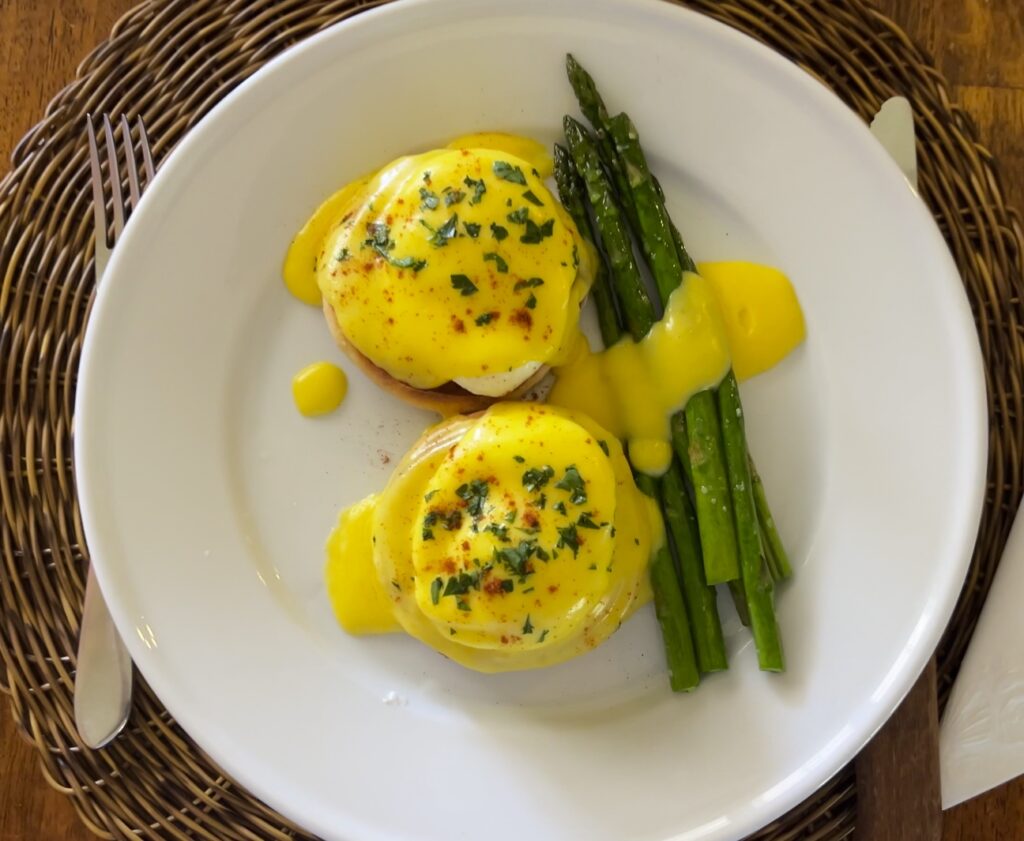
Cold butter hollandaise is my favorite way to make this classic French sauce at home. Instead of clarifying butter and slowly drizzling hot butter into egg yolks, this method uses cold butter, cut into small cubes and stirred into gently warmed yolks one piece at a time. The result is a rich, glossy hollandaise that’s remarkably forgiving and gives you much more control over the temperature and emulsion.
Cold Butter Hollandaise
Hollandaise has a reputation for being one of the more intimidating sauces to make at home. Traditional recipes call for clarified butter to be slowly drizzled into egg yolks while you carefully manage the temperature. Get the butter too hot and the yolks can scramble. Let the sauce get too cool and the butter can begin to separate.
Cold butter hollandaise takes a different approach.
Instead of treating butter as a liquid that needs to be carefully incorporated into the yolks, this method adds cold butter directly to gently warmed egg yolks. The butter is cut into small cubes and added one piece at a time, allowing each cube to soften and gradually emulsify before the next one goes in.
The result is a silky, rich hollandaise with a beautiful glossy texture—and, more importantly, a little more breathing room for the cook.
Why Cold Butter Works
Butter isn’t just fat. A stick of butter contains butterfat, water, and milk solids. When you clarify butter, you remove the water and milk solids, leaving behind almost pure butterfat.
With this method, the butter goes into the sauce cold. As each cube warms, it gradually releases its components into the yolk mixture rather than introducing a large quantity of hot fat all at once.
That gradual process is the heart of this cold butter hollandaise recipe.
You’re not racing to drizzle hot butter into the yolks. You’re adding small amounts of butter, stirring gently, and allowing the sauce to develop at its own pace.
And that’s particularly useful in a home kitchen, where you’re generally making enough hollandaise for two, four, or perhaps a few more people—not several quarts for a busy restaurant service.
The Secret Is Patience
The butter should remain cold until you’re ready to use it. Cut it into roughly half-inch cubes and add them one at a time over a gentle bain-marie. Each cube takes roughly 15–20 seconds to soften and incorporate.
As more butter goes in, you’ll see the transformation happen right in front of you. The loose yolks become thicker, creamier, and increasingly glossy. By the sixth or seventh cube, the emulsion should be clearly established.
The goal isn’t speed.
It’s control.
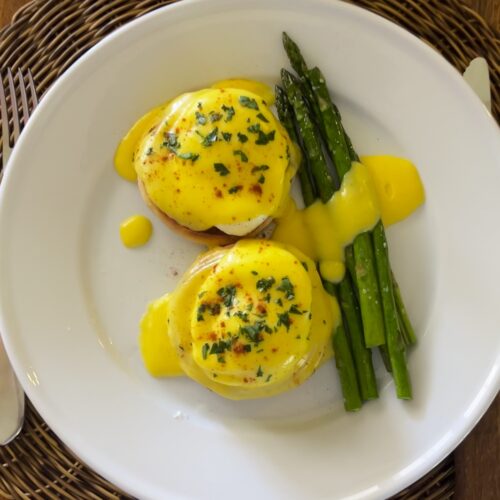
This homemade hollandaise is particularly good for Eggs Benedict, but don’t stop there. Try it with asparagus, roasted vegetables, poached fish, steak, or anywhere you’d normally reach for a rich, buttery sauce.
Cold Butter Hollandaise
Equipment
- 1 Heatproof Bowl
- 1 Sauce Pan Small
- 1 Whisk
- 1 Measuring Spoon
Ingredients
- 4 large egg yolks
- 8 tablespoons 1 stick unsalted butter, cold Cut into 1/2 inch cubes
- 1 tablespoon fresh lemon juice
- A few dashes Tabasco sauce to taste
- Salt to taste
Instructions
Prepare the butter
- Keep the butter cold—straight from the refrigerator.
- Cut the stick into approximately ½-inch cubes. You should have roughly 8 cubes.
- Don’t melt the butter. That’s the whole idea.
Set up the bain-marie
- Fill a small saucepan with an inch or two of water and bring it to a bare simmer.
- Set a heatproof bowl over the saucepan, making sure the bottom of the bowl does not touch the water.
- You want gentle steam—not boiling water.
- If the water is aggressively bubbling, turn down the heat.
Start the yolks
- Add the 4 egg yolks and 1 tablespoon lemon juice to the bowl.
- Whisk together for about 30 seconds, just until the yolks become slightly lighter and begin to thicken.
- Add a few dashes of Tabasco.
- You’re warming the yolks—not scrambling them.
Add the cold butter
- Now for the part that breaks the rules.
- Add one cold butter cube to the warm yolks.
- Stir continuously but gently with a whisk until the cube softens and disappears into the yolks.
- Don’t whisk aggressively.
- Once the first cube has incorporated, add another.
- Continue adding the butter one cube at a time, allowing each cube to incorporate before adding the next.
- The process should be deliberate rather than rushed. Each cube will take roughly 15–20 seconds to soften and incorporate.
Let the emulsion build
- As you add the butter, the sauce will gradually change.
- At first, you’ll have relatively loose yolks. As more butter is incorporated, the sauce becomes:
- thicker → glossier → richer → more structured
- Around the sixth or seventh cube, you should see the emulsion really come together.
- Continue until all 8 tablespoons of butter have been incorporated.
Control the heat
- This is where the cold-butter method really earns its keep.
- If the sauce becomes too thick or the bowl begins to feel too hot, lift the bowl off the bain-marie for a few seconds while continuing to stir.
- The residual heat in the bowl will continue melting the butter without continuing to cook the yolks.
- Return the bowl to the bain-marie when necessary.
- The goal is gentle heat, not high heat.
Check the consistency
- Dip the back of a spoon into the finished hollandaise.
- The sauce should coat the spoon in a thick, even layer.
- Run your finger through it.
- The line should hold.
- If it’s too thick, a tiny amount of warm water can loosen it. If it’s too thin, continue gently stirring over the bain-marie for a little longer.
Season and hold
- Taste and adjust with additional:
- Salt
- Lemon juice, if needed
- Tabasco, if you want more heat
- Keep the finished hollandaise warm over—not directly on—the bain-marie until you’re ready to serve.
Notes
If you’re interested in understanding more about how sauces like hollandaise come together, take a look at our [guide to emulsions].
Hollandaise is one of the classic mother sauces of French cuisine, and understanding the basic principles of emulsification makes it much easier to troubleshoot when a sauce begins to break.
Leave a Reply