
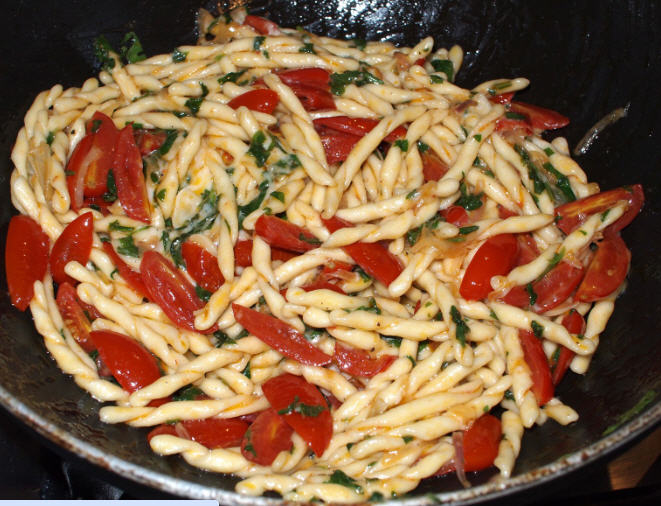
This strozzapreti pasta recipe is a simple and authentic Italian dish made with basic pantry ingredients and traditional technique. It’s a comforting homemade pasta that focuses on texture, flavor, and simplicity without requiring advanced cooking skills.
Strozzapreti is a traditional hand-rolled pasta that pairs beautifully with a wide range of sauces, from rich tomato-based options to simple olive oil and herb combinations. This version keeps things approachable for home cooks while staying true to its rustic Italian roots.
Whether you’re cooking for a weeknight dinner or preparing a special homemade meal, this recipe delivers consistent results and bold, satisfying flavor.
Explore more pasta recipes in our Pasta category
How to Make Strozzapreti Pasta Recipe
This strozzapreti pasta recipe comes together with simple ingredients and traditional technique. Follow the steps below to create a rustic, authentic pasta dish at home.
Strozzapretti Pasta
Ingredients
Ingredients for Strozzapreti Pasta
- 2 ⅓ cups ‘00’ flour – Italian plus more for dusting
- ¾ cup water
Instructions
Tips for Strozzapreti Pasta Recipe
- Sift the flour. Sift the flour(s) through a fine-mesh strainer into a mound on a work surface.
- Create a well. Make a well in the center of the mound about 6 inches wide with sides high enough to hold the water in the center. Gently pour 3/4 cup water into the well.
- Incorporate some of the flour into the water. Using a fork, gently whisk some of the flour next to the water into the water until the mixture looks like thick pancake batter.
- Finish combining the flour and water. Once the mixture is too thick to whisk anymore, use your hands or a bench scraper to finish folding the dry flour into the dough. Working from the outside in, fold the flour into the wet dough mixture until everything is completely combined into a shaggy dough. If the mixture is too dry, wet your hands and continue kneading.
- Knead the dough. Pull the top edge of the dough over the center and press down with the palm of your hand. Rotate the dough by a quarter of a turn and repeat. Repeat until you have a rough, slightly shaggy ball of dough, about 5 minutes.
- Check the dough for moisture. If the dough still appears dry on the outside, wet your hands and continue to knead until the dough is smooth with light lumps on the outside, about 5 minutes more. Press the dough with your finger, it should gently bounce back. (Alternatively, if the dough appears too wet, then dust some flour.)
- Wrap the dough and let it rest. Wrap the dough in plastic wrap and let rest at room temperature for 15 to 20 minutes. Meanwhile, clean up the work surface.
- Divide the dough. Generously dust the work surface with flour. Unwrap the dough and cut it in half with a knife or bench scraper. Rewrap one piece in the plastic wrap while you roll out the other.
- Roll the dough. Using a rolling pin, roll the dough until very thin, about the thickness of 6 to 8 stacked sheets of paper (about 3 mm). The shape doesn’t matter, but it can be rolled into a rough 10×16-inch rectangle.
- Cut dough into strips. Using a pastry, pizza wheel, or sharp knife, cut the dough into 1-inch wide strips. Cover the strips with plastic wrap while you twist the pasta one strip at a time.
- Twist the pasta. Line 2 baking sheets with parchment paper and lightly dust with flour. Working one strip at a time, gently pull the strip from the work surface. Using your non-dominant hand, gently pinch the strip about 3 inches from one end. Using your dominant hand, gently twist the strip as much as you can until you have about a 2-inch long twisted piece of pasta. Remove the twist from the rest of the strip with a pinch and twist motion, then place it on the baking sheet. Repeat with the rest of the strip, then repeat with the remaining strips, placing the strips in a single layer on the baking sheet. Let pasta dry on the baking sheet for 10 minutes. (The strozzapretti can be frozen on the baking sheet at this point.)
- Repeat with the remaining dough. Repeat rolling, cutting, and shaping the remaining piece of dough, placing it on the second baking sheet.
- Cook the pasta. Fill a large pot with water, bring to a boil and season generously with salt. Add the pasta and cook until just al dente, 3 to 4 minutes. Drain and serve with your favorite sauce.
Notes
This homemade pasta dish is a simple way to bring authentic Italian cooking into your home kitchen.
Strozzapreti pasta recipe works best when paired with simple sauces that highlight its rustic texture. A classic tomato sauce, garlic and olive oil, or a light cream-based sauce all complement this pasta beautifully.
When cooking strozzapreti pasta, the key is to keep the dough slightly rough in texture so it holds sauce well. This creates a more authentic Italian-style result that feels both hearty and balanced.
This strozzapreti pasta recipe is a great example of traditional home cooking that focuses on simplicity, quality ingredients, and technique rather than complexity.
Homemade strozzapreti pasta is best enjoyed fresh. It also holds up well when paired with bold sauces and simple ingredients. The texture of this pasta makes it ideal for capturing flavor. This creates a satisfying bite in every serving.
Serve this strozzapreti pasta recipe immediately for the best texture and flavor, finished with fresh herbs and a drizzle of olive oil.
Once you master this technique, you can adapt it to different sauces and seasonal ingredients. You can make it a versatile addition to your home cooking repertoire.


Leave a Reply